


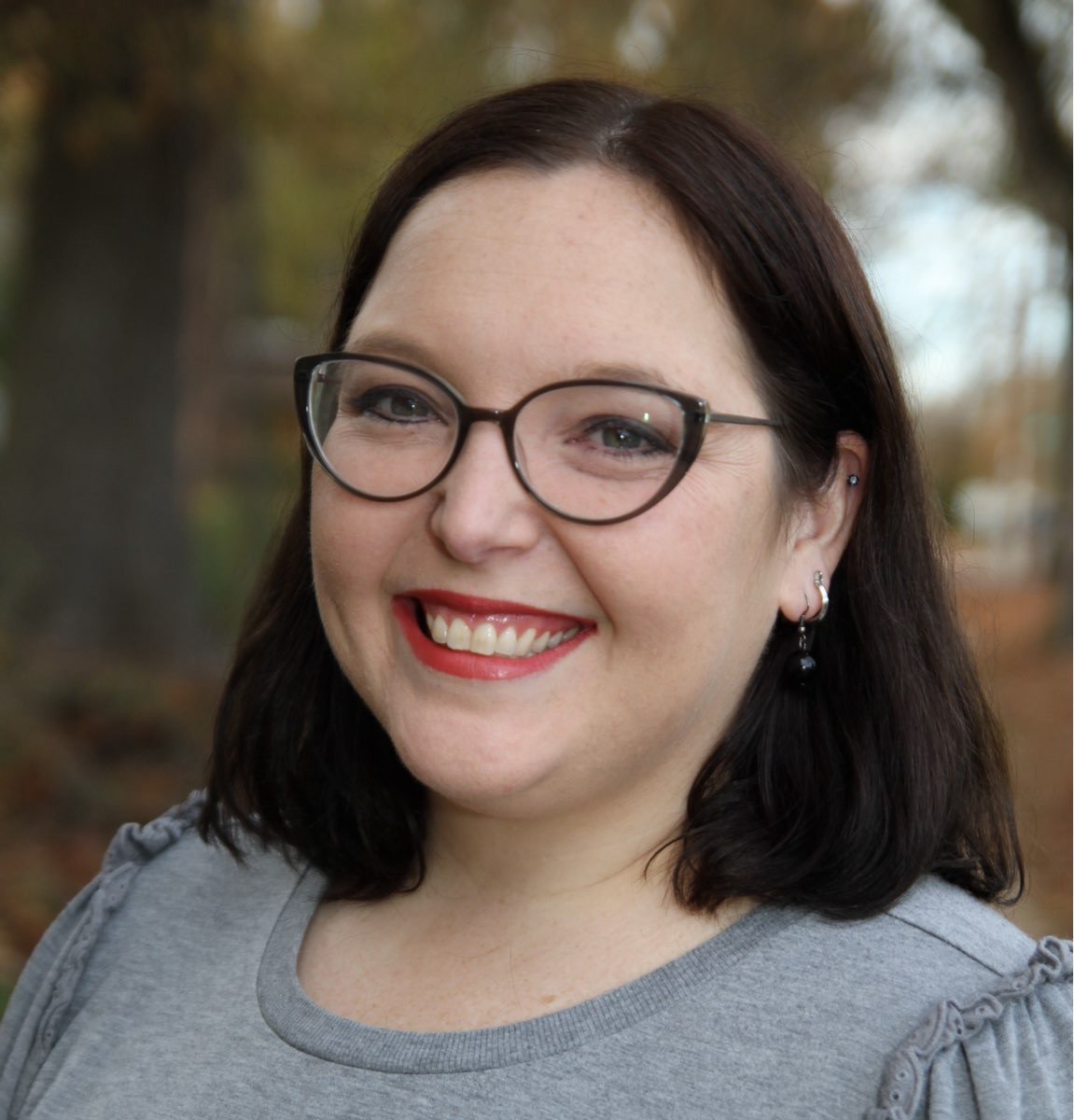
Marley Maharrey
is an actor, director, and former middle school teacher. She is co-founder of West of Shake Rag, an improv troupe based in Tupelo. Marley currently teaches with Creativity First Lab, Olive Tree Book Club, and serves on the board of Mississippi Thespians.
Trusting in the Unscripted: A Residency Experience
Marley Maharrey is a Mississippi Whole Schools Teaching Artist Certification Program candidate who spent her residency at Saltillo Elementary learning what happens when you plan carefully, then trust the unscripted moments anyway. In her reflection, she shares how she used theatre and improvisation to teach speaking and listening, author’s purpose, story elements, and playwriting, plus what it looked like to meet a principal’s goals for staff professional development focused on resources, team building, and confidence.
The TACP (Teaching Artist Certification Program)
Mississippi Whole Schools (MWS) offers a training program in which participants learn how to use their arts knowledge to teach academic standards. Throughout this learning experience, the artists collaborate with each other as well as previously certified teaching artists. Since August 2024, I have researched ways to connect my chosen discipline, theatre arts, to elementary and secondary standards in English, history, math, science, and electives. All of this hard work culminates in a 10-day residency with a MWS-participating school. I had the honor of working with Saltillo Elementary School during my participation in the Teaching Artist Certification Program (TACP).
Reveal Day
In September 2024, the five teaching artist candidates sat in a conference room awaiting the big reveal of our assigned residency schools. Since I previously worked as a project director during my classroom teaching career, I knew the arts-integration teams from many other Mississippi schools. Belinda McKinion and Cindy Parker walked in with lots of cheers and sat at my table! Saltillo Elementary already had legendary status as an arts-integration model school, so I was very much excited to work with their teachers.
“We want you to work with our 3rd graders. They are sweet, active, and excited to try new things,” McKinion explained. She and Parker felt that improvisation and author’s purpose would be the best direction for my residency plan. While adventurous and kind, some of the students were more introverted. McKinion wanted me to bring an approach to 21st century skills in a way that would build student camaraderie and confidence.
The Standards
For the residency, I wanted to use improvisation to teach speaking and listening standards, author’s purpose, story elements, and playwriting. Performing for an audience, no matter its size, requires actors to stay focused on their task and to present it in a clear and effective way. I like to tell participants that you never want the audience to ask, “What did they say?” Theatre is something that we not only have the opportunity to create, but we always absorb and interpret it whatever the approach. Within my residency lesson, students analyzed the words and actions of a character to learn their motives and personality. This led to why an actor or author would include such behaviors. Were they trying to only entertain you? Or was there a deeper purpose to actually persuade you? Explain or describe something? Teach something?
How We Integrated the Arts
During the first days of my residency, I focused only on the speaking and listening standards. We used some basics of acting (facial expressions, projection, movement, gestures, and cheating out). After learning warm-up games that needed one or more of the basics, we moved on to improvisational games. I absolutely love seeing the students open up with their senses of humor and creativity. It’s brave of them; I remind them that public speaking is still a huge fear, even amongst adults; so what they are doing is amazing! After they are comfortable with the format of a game with (limited) instructions, we move on to original scenes. I direct which student will have the first line and which will respond. They have to really listen to the line and think of a response that will keep the scene moving forward. A lot of you may notice that this is the universally-known “Yes, and” motto that originated with improvisation. While a few of these scenes were calm and general, others included urgent situations, big decisions, and a range of emotions. However, not all students enjoy improvisation. It stresses them out because they don’t know if what they create will be “good enough.” They like detailed instructions. For this reason, I like to include provided scenes as part of my residency. We used these scripts to continue our exploration of speaking and listening, as well as story elements. After each performance, the class would discuss characteristics, setting, plot, conflict, and theme, leading into the author’s purpose. Our final days were playwriting. Students worked in groups of three to write a short scene while considering the story elements from our previous script breakdowns. Without going into too much detail, I’ll say that these third graders hilariously included phrases and situations inspired by their own experiences. Surrealism is a lot of fun, but I’m partial to realism in comedy. I love seeing something relatable onscreen, on the stage, or on the page.
Professional Development
Our TACP residency required us to teach a workshop of professional development (PD). Principal McKinion had three priorities for my PD planning: 1) providing resources, 2) team building, and 3) building confidence. Just as I always appreciated a shared “toolbox” of great teaching practices, the 3rd grade educators felt the same way. Community is extremely important to the administrative staff of Saltillo Elementary. She wants her teachers to feel confident when using new arts-integration methods in their classrooms. I met with the 3rd grade gifted teachers on February 7th. We went through a list of improvised games that are adaptable to an arts-integrated lesson and grades 3-5. It was a great time. These teachers were receptive, funny, and motivated to use improvisation in their classrooms. I am disappointed I couldn’t stick around to see what they ended up using and how they changed things for different standards. After my professional development, the teachers shared with me some possible challenges in improvisation were thinking on your feet, listening for details, and having a gentler pacing into what the activity or game requires. I appreciate their feedback and know that they will take those obstacles into consideration when accommodating their students’ styles, just as I will take that into future PDs.
Saltillo Made an Impression
I feel Saltillo Elementary was a great fit for my first residency. The school is passionate about education, life skills, and community. They are funny and energetic, and they know how to create and accomplish a task with confidence and a true sense of self. During my time in the TACP, I have learned a lot about working with the whole student. We have learned that the understanding and application of a concept is more important than the studied, memorized, and directly recalled information. It’s not only about knowing, it’s about creating.

Teachers learn more improvisational games to use in the classroom.

Mrs. Bearden and her class play a round of the tableau improv game “Slideshow.”

Students use story elements and improvisational skills to write short scripts.

Mrs. Maharrey excitedly stands outside Saltillo Elementary School.
Take our Teaching Artist Self-Assessment to help you
identify your best next steps.
Want to learn more about the Teaching Artist Certification Program?